
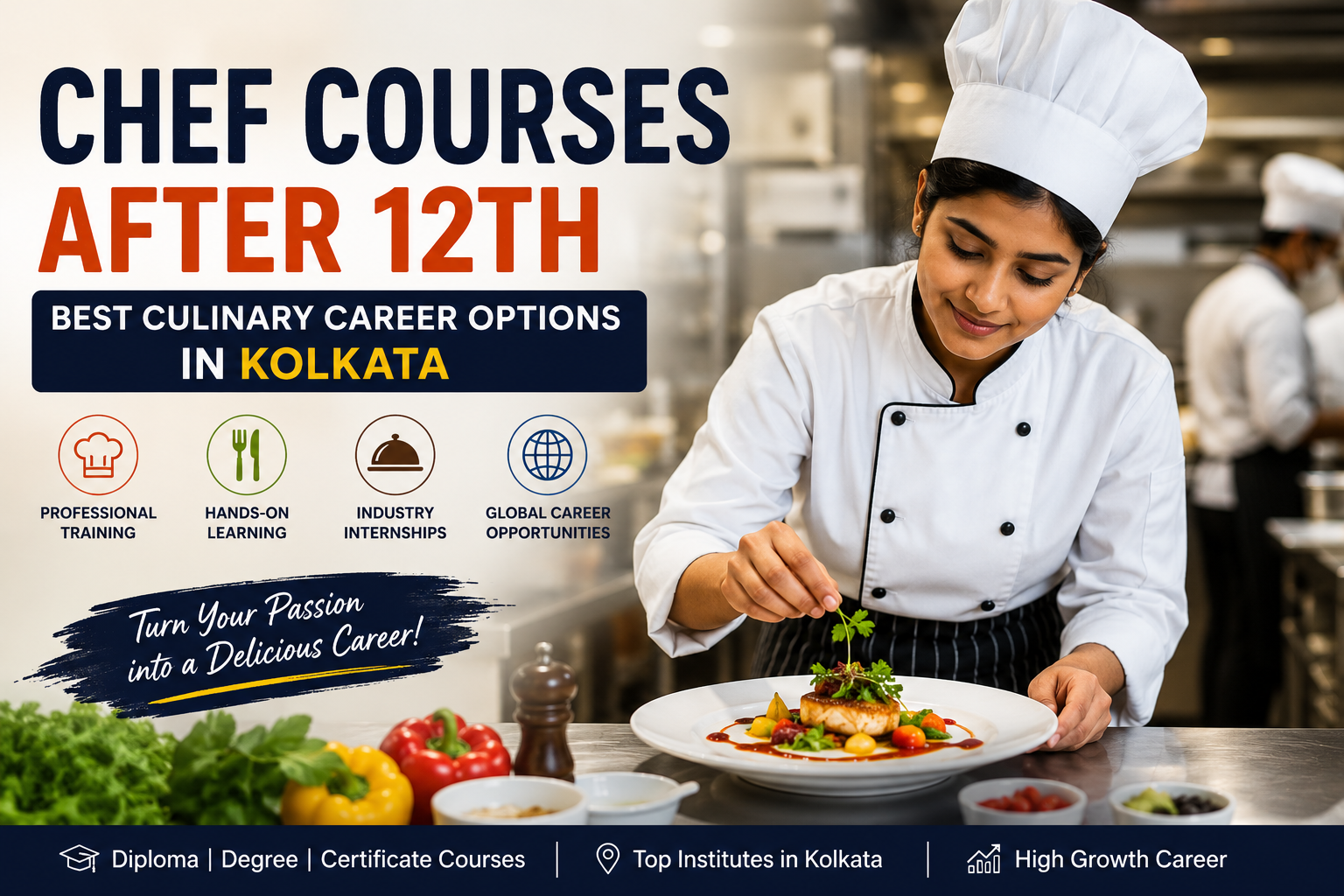
The aroma of freshly baked bread, the sizzle of a perfectly seared steak, the artistry of a beautifully plated dessert—if these excite you more than textbooks ever did, pursuing one of the best chef courses after 12th could be your perfect career choice.India’s food industry is experiencing unprecedented growth, and trained chefs are in higher demand than ever before.
From luxury hotels and cruise lines to cloud kitchens and Instagram-worthy cafés, opportunities for culinary professionals have expanded dramatically. Kolkata, with its rich food heritage and growing hospitality sector, has emerged as an excellent destination for aspiring chefs to begin their journey.
Students exploring culinary careers often also compare broader hotel management courses in Kolkata before choosing their specialization.
Why Culinary Careers Are Booming
India’s food service industry has transformed over the past decade. Quick-service restaurant chains are expanding rapidly, boutique bakeries are opening in every neighborhood, and cloud kitchens have revolutionized food delivery. Add to this the explosion of food content on social media, and you’ll find that skilled chefs now have more career paths than ever before.
The hospitality industry isn’t just looking for people who can cook—it needs professionals who understand food science, kitchen management, international cuisines, and the business side of running food operations. This is precisely what professional culinary education provides.
Students interested in hospitality can also explore hospitality and tourism management courses for wider industry exposure.
Benefits of Starting Early
Choosing a culinary path right after 12th offers several advantages:
- Faster industry entry — While peers spend years in traditional degrees, you’re already building real-world experience
- Skill-based learning — Culinary education emphasizes doing over memorizing
- Global opportunities — Trained Indian chefs are sought after on cruise ships, international hotels, and resort chains worldwide
- Creative fulfillment — Few careers offer the same blend of artistry, technical skill, and immediate gratification
Students planning long-term careers in hospitality may also benefit from understanding career opportunities in hotel management in India.
Understanding Culinary Courses
Culinary arts is far more than learning recipes. Professional chef training covers food production techniques, knife skills, kitchen safety protocols, menu planning, food costing, and the science behind cooking.
Students learn to work efficiently under pressure, manage kitchen teams, and maintain the hygiene standards that professional kitchens demand.
If you are serious about becoming a chef, reading this guide on how to become a professional chef in Kolkata can help you understand the industry better.
What You’ll Learn
A comprehensive culinary program typically covers:
- Classical cooking techniques — sautéing, braising, roasting, and more
- Bakery and confectionery — breads, pastries, chocolates, and desserts
- International cuisines — Continental, Asian, Mediterranean, and fusion cooking
- Food presentation — plating aesthetics and visual appeal
- Kitchen operations — inventory management, food costing, and team coordination
- Safety and hygiene — HACCP principles and food handling standards
Students who want advanced operational knowledge can also explore culinary operation management for restaurants.
Culinary Arts vs. Hotel Management
Many students confuse these two paths.
Hotel management is broader—covering front office operations, housekeeping, and hospitality administration.
Culinary arts focuses specifically on food production and kitchen operations.
If your passion is cooking rather than managing hotel operations, culinary arts is the more direct route.
Before deciding, students often compare programs offered by the best hotel management colleges in Kolkata and specialized chef training institutes.
Best Chef Courses After 12th in Kolkata
Diploma in Culinary Arts (1 Year)
This intensive program is ideal for students who want to enter the industry quickly. The curriculum balances theory with extensive practical training, covering Indian and Continental cuisines, kitchen management, and food costing.
Graduates typically start as commis chefs and advance rapidly with experience.
Students looking for professional chef education can explore the best culinary institute in Kolkata for course details and career scope.
Bachelor’s Degree in Culinary Arts (3 Years)
For those seeking comprehensive training and stronger long-term career prospects, a three-year degree program offers deeper knowledge, extended internships, and exposure to specialized areas.
This route is particularly valuable for students aspiring to executive chef positions or international careers.
Students comparing career-focused hospitality programs may also check hotel management course duration, fees, and career scope.
Certificate Programs (3–6 Months)
Short-term courses suit home cooks looking to professionalize their skills or professionals seeking specialization in specific areas like baking, chocolate work, or a particular cuisine style.
These programs are also ideal for students who want fast skill development before entering the hospitality industry.
Bakery and Confectionery Specialization
With the café culture flourishing across India, specialized pastry and bakery training has become increasingly valuable.
Programs focus on artisan breads, cake decoration, chocolate tempering, and contemporary dessert techniques.
Students interested in bakery careers can also read about professional culinary journeys and chef training .
Eligibility and What to Expect
Students from any stream—Arts, Commerce, or Science—can pursue culinary courses.
Most institutes require completion of 10+2 from a recognized board, though specific mark requirements vary. Passion for food and willingness to work hard matter far more than academic background.
Culinary education is hands-on by nature. Expect long hours in training kitchens, learning to work as part of a brigade, and developing the stamina that professional cooking demands.
Programs typically include industry internships, giving students real experience in hotel or restaurant kitchens before graduation.
Students exploring broader hospitality education can also understand why practical hospitality training matters more than theory.
Career Paths After Culinary Training
| Role | Description | Approximate Salary |
| Commis Chef | Entry-level kitchen position; foundation for growth | ₹2–4 LPA |
| Sous Chef | Supervises kitchen teams; manages daily operations | ₹5–8 LPA |
| Executive Chef | Senior leadership; menu development and kitchen strategy | ₹10+ LPA |
| Pastry Chef | Specializes in desserts, breads, and confections | ₹4–8 LPA |
| Cruise Line Chef | International travel with premium hospitality brands | Varies widely |
Beyond traditional kitchen roles, culinary graduates now work as food stylists for advertising and media, launch cloud kitchens, start catering businesses, or open their own restaurants and cafés.
The entrepreneurial path has become increasingly accessible with lower startup costs for cloud kitchens and delivery-focused concepts.
Students can also explore detailed career opportunities after chef courses after 12th .
Choosing the Right Institute
When evaluating culinary schools, consider these factors:
Training Facilities
Modern kitchen labs, bakery workshops, and restaurant simulation setups make a significant difference in skill development.
Industry Connections
Strong internship programs and hotel partnerships provide invaluable real-world experience and often lead directly to job placements.
Faculty Experience
Instructors with actual industry backgrounds bring practical insights that textbooks cannot provide.
Curriculum Balance
The best programs emphasize hands-on training while covering necessary theory, food science, and management principles.
Placement Support
Look for institutes with established recruiter networks and track records of placing graduates in reputable establishments.
Students comparing colleges should also read this guide on how to choose the top hospitality institute in Kolkata.
Why Kolkata Works
Kolkata offers a compelling combination for culinary students:
- Rich food culture blending Bengali traditions with global influences
- Affordable education compared to Delhi or Mumbai
- Growing hospitality industry with internship opportunities
- Diverse café and restaurant ecosystem for practical exposure
The city’s established hotel properties and emerging café scene provide diverse training environments.
Students interested in deeper food science education can also explore culinary science programs .
The Reality Check
Culinary careers are rewarding but demanding.
Early career stages involve long hours on your feet, working through weekends and holidays when others celebrate. The kitchen environment requires discipline, patience, and the ability to perform under pressure.
Success comes to those who treat it as a craft to be mastered over years, not a quick path to celebrity chef status.
Students still evaluating hospitality as a profession should read whether hotel management is a good career after 12th.
Taking the First Step
If cooking genuinely excites you—if you find yourself watching technique videos for fun, experimenting in your kitchen, or dreaming about creating dishes that delight people—professional culinary training can transform that passion into a sustainable career.
Research institutes thoroughly, visit campuses if possible, and speak with current students or alumni. The right program will challenge you, develop your skills systematically, and connect you with opportunities to build your culinary future.
Students planning admission can also check the latest hotel management admission guide for Kolkata and explore the top hotel management colleges with placements.
The kitchen is calling. Are you ready to answer?
Frequently Asked Questions (FAQ)
The best chef course after 12th depends on your career goals. A Diploma in Culinary Arts is ideal for quick industry entry, while a Bachelor’s Degree in Culinary Arts offers deeper training, internships, and better long-term career growth. Students interested in baking can also choose bakery and confectionery specialization courses.
Freshers usually start with salaries between ₹2–4 LPA as commis chefs. With experience and specialization, professionals can become sous chefs, executive chefs, pastry chefs, or cruise line chefs earning significantly higher salaries in India and abroad.
Yes. Students can directly pursue culinary arts or chef training programs after Class 12 without enrolling in a full hotel management course. Culinary arts focuses specifically on cooking, kitchen operations, bakery, and food production skills.
Yes. Culinary arts has become one of the fastest-growing career options in India due to the expansion of restaurants, cafés, luxury hotels, cloud kitchens, cruise lines, and food startups. Skilled chefs now have strong job opportunities both in India and internationally.
After completing chef courses, students can work as commis chefs, pastry chefs, sous chefs, executive chefs, food stylists, catering professionals, restaurant entrepreneurs, or cruise line chefs. Many graduates also start their own cafés, bakeries, and cloud kitchens.